Hair Loss Information at Balding Blog
 

About     Contact     Archives     Videos     Events     Hair Transplant

Your hair loss questions, answered daily.

 
! NHI returns to Orange County!   Dr. Jae Pak is available for consultations in Newport Beach, CA. First consult is FREE! Call 800-639-4247.

Category Archive for FUE


How Soon After FUE Can I Wear a Baseball Cap Without Being Careful?

CapHello Dr.

First of all thank you for having such an informative and helpful site. I wish other doctors would spend the time to have a site like this rather than having their sites full of promotional and marketing tricks. My questions is very simply.

I recently had ( 3 weeks ago ) a FUE procedure of 2600 fues to the zone 1 and zone 2. My question is… how soon can I start wearing a baseball cap/hat WITHOUT being extra careful with it. Meaning that the hat can touch the recipient area and also be a bit tight. My doctor say to wait a YEAR before I do this but it seems to be a bit too much. He said I can wear a hat after 30 days but making sure it is very loose and that it doesn’t touch the scalp. I find this very difficult to do given the locations where I received grafts.

I would like very much to know your opinion on this. Thank you!

Once the scabs are off, you can wear a hat or do anything that is reasonable. The donor area should be healed by this time. I’m not your doctor and I don’t know how your procedure was done, but that is the instructions I give my patients. You should double check with your surgeon, of course.


I Want Scar Revision and Then FUE to Eliminate My Scar Completely

Hi,

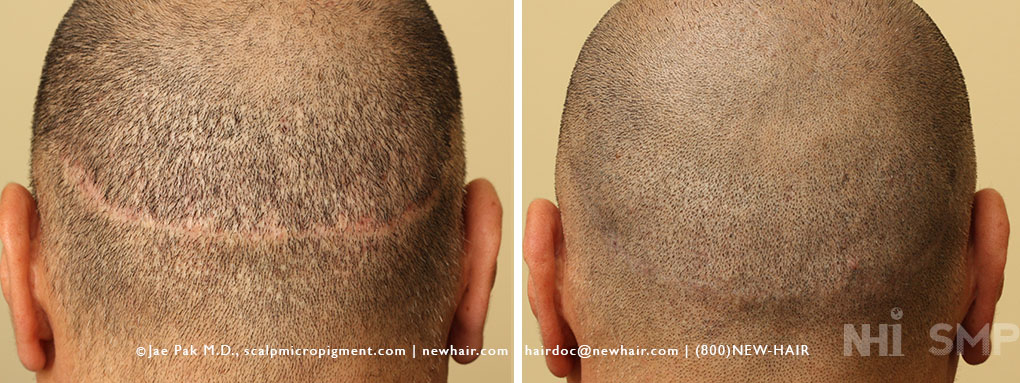
First of all I want to thank you for this informative blog. I have searched this wonderful blog and have found numerous postings relating scars and hair transplant. Here’s my case: I have what “they” call a coronal scar that runs from ear to ear. What I want is to completely cover the scar through a FUE procedure, but I want my scalp to be like how it first was, normal. My research has been conclusive and I first want to have a scar revision surgery to reduce the width of the scar, once that is done i want to follow some type of scar treatment to make the scar less obvious in color (seems like the scar gets pink/red after a scar revision surgery). Afterward get the FUE procedure and go from there. Is there any treatments that you would suggest?

I want the scar to be inconspicuous to the point to be able to cut the hair in the military/short hair style, because ultimatley i want to join the military as an officer.

Best Regards

Your plan is good, but it may not be realistic to have the scar completely hidden. Even if the hair in the scar is brought up to near normal density (which may take a few FUE procedures), there is often a color difference in the remaining scar, though of course it will be hidden with FUE grafts.

As you are local to my Los Angeles office, please arrange to see me so that I can ascertain a plan that matches yours. Any preparatory treatments can be assessed and recommended when you see me. You can call 800-NEW-HAIR (or 310-553-9113) to schedule a free consultation with myself or Dr Pak.


FUE Affordability and Restoration Robotics

Hi Dr. Rassman. I’m 25 and have been following your site for a few years now since my hair started thinning at 22. I’ve been taking finasteride though and it’s kept it at bay…

I have a couple of questions for you if you please:

1) Any chance that FUE can become more affordable soon? Am I right in thinking that a FUE procedure of 2000 grafts would cost over $15,000 nowadays? Any chance it could drop to $10,000 soon?

2) This question is sort of related to the one above - Do you have any updates on the Restoration Robotics FUE procedures? All I know is that there are trials being carried out here. You mentioned before you had granted them use of your license… Have you enquired as to whether they’re seeing any success? Any chance the robotic technique will result in cheaper FUE procedures?

That’s all. I really hope you can answer these questions which have been on my mind (and many others I’m sure) for a while now.

Best Regards

RobotCosts for follicular unit extraction (FUE) will follow a supply/demand formula. Although many physicians perform FUE procedures, the failure rate is very high, so buying 2000 FUE grafts may mean that you purchase the delivery of these grafts, but survival may not follow the delivery because of damage done at the time of extraction. There are many groups working on mechanisms to deliver quality FUE grafts that will not be damaged so that they grow. Many groups have devised better tools and have announced them at the various ISHRS conferences and elsewhere (Drs. Feller, Harris, Boudjema, Cole, and myself).

Restoration Robotics will require FDA clearance before their product can be released for commercial application. The other devices are what the FDA calls Class 1 devices, which do not require FDA approval. I’m not sure of their progress at the present time, nor do I know of any costs, though doctors will still likely set their own pricing. My guess (and I am not privy to any info, so this is entirely speculative) is that the equipment start-up costs will be substantial and like any other product or service, costs will come down at some point in the future when it becomes available to a wider market. How near of a future, I couldn’t tell you. One step at a time.

Note: The image is of a violin-playing robot developed by Toyota. It won’t do hair transplants, but it might play you a song.


What Hair Can Shock Loss Effect? — and the Cost of Hair Transplant Surgery

I can only afford to have my bald patches of my hairline transplanted (FUE) so no other areas of hair will be near. Will the shock loss only affect the donor follicles? or does all of your head hair fall out?

QuiltWhile price/cost is a factor for any cosmetic surgery, it should not dictate the surgery itself. Having cosmetic surgery is not like shopping for the cheapest loaf of bread, laundry detergent, or shoes.

When shock loss occurs, it may be the result of the anesthesia given to numb the head for the transplant and may cover a large area of the scalp, not just the area where the grafts are placed. The mechanical impact of the transplant may not be the cause of shock hair loss. You also have to look at the big picture. We call this the Master Plan. Surgery must be placed along your hair loss timeline and it will be progressive. In other words, you can’t just transplant hair to the small bald patches and expect that to solve your problem, as the balding process is regional. What if you lose more hair around the transplant and behind it as your balding continues? A good doctor should give you insight on your worst case scenario and plan for such consequences. After all, you don’t want to have small patches of transplanted hair scattered around your bald scalp in the years down the line “IF” you were to go bald.

To answer your question in further detail, shock loss is a concern… and while it may not happen, it is a risk. I have addressed your question with the assumption that you have genetic male pattern baldness and not just a patch of bald scalp (which is very rare in genetic balding). Either way, you need a Master Plan created with a doctor (not just me on the Internet) who is willing to look at your hair loss problem as a long term process.

For the follicular unit extraction (FUE), you need to understand it does not work to fill in the scalp balding areas like a patchwork quilt. Do not let the cost of FUE be the primary reason in your decision making process as to what to do and where to put the hair. It is better to be bald than be disfigured with a half-ass surgery.


Transplanting Neck Hair to My Mustache?

I had a question regarding a moustache transplant. I have a sparse moustache and thin hair on my head. I’m concerned that my head hair would not be thick enough for facial hair. I was wondering if it is possible to transplant my much thicker coarser beard hair on my neck to thicken my moustache without too much scarring. My beard goes all the way down to my chest and I hate shaving it anyways. Thanks

MustacheHair from anywhere on the body can be transplanted to another location. Follicular unit extraction (FUE) is a good way to do a limited number of hair transplants into a mustache. This is something that you and your doctor should discuss.

Remember, however, that hair from different areas on the body have different hair cycles, which means that if the telogen (resting) cycle is long and the anagen (growing) cycle is short, then less of the hairs will be working for you at any one time. You can learn more about hair growth cycles here.


Female Hair Transplant Without a Line Scar?

Hi I am a 20 yr old female wondering about a hairline transplant. A previous question on your site about evening out a widows peak was the most similar to my request. I have had a high hairline on the sides for several years and a recent year on medications has now thinned out the hair on either side near the temple. I have always hated my hairline which is ill suited to my face shape and want to at least fill in the hairline around my temples. I am assuming hair grafts would be the correct procedure and want to know more about them.

HAving watched documentation of several female hairline transplants I wonder : Is the donor area for the grafts always left with a long scar? (example had one across the back of her head) CAn this be done without any scarring or difference to the doner area? and (of course) what would be the cost for this procedure?

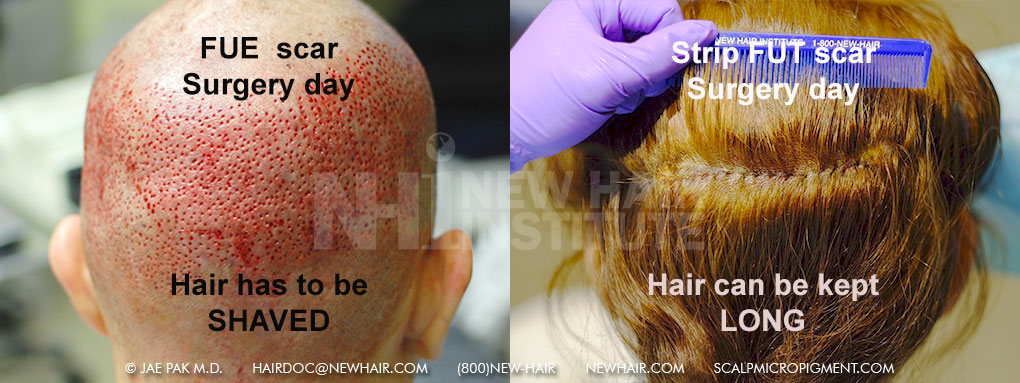
There are 2 techniques for hair transplantation — the strip method (with the linear scar) and FUE (where you are left with small punctuate scars in the donor area). There’s no surgical procedure without some level of scarring, though trying to minimize the scarring is the best we can do. Everyone scars differently, and closure techniques for the strip method have resulted in extremely thin linear scars, and the length of the scar depends on the amount of grafts required. Costs also depend on how many grafts are needed, with FUE fees being higher due to the more time-intensive nature of the procedure. You can learn more about FUE at the following pages:


Gho Clinic Says Their FUE Allows the Donor Hair to Regrow?!

Dr. Rassman
i have stumbled upon a hair transplant clinic in Prague called the “GHO clinic” which offer a proprietary FUE in which apparently the donor hair will regrow (page here)

i don’t know how well the human body would repair a partially punched out hair follicle, i just want to ask if this procedure is actually hair multiplication available today or just someone trying to make his FUE look better than everyone else’s?

I just chaired the session at the annual ISHRS meeting in Amsterdam and had Dr. Coen Gho as one of the speakers. I had lost my voice, so I could not comment as the chair of that session, but considering that you asked me about him, I will use this as a forum to speak my opinion on what I heard.

Dr. Gho reported that he did 1500 patients with his “cloning” procedure. If I had to give a score to the material he presented using a 1-10 scale for scientific credibility, I’d score it a 1, with 1 being the lowest possible. His science was pathetic, with slides that were blurred and blackened out so that there was really nothing to see. He claimed that his FUE technique cut the follicular units in half longitudinally, and that the part that remained regrew hair, but there was no proof of this in any of the material he showed. He did not show any patient results and certainly was never reviewed by any credible agency or physician.

Partially divided follicles have been well studied by many prominent researchers. Despite their attempts, none succeed to create even an equal amount of hair (equal to the original divided follicular units). Dr. Kim (Korean researcher) had done some wonderful research on this very subject and failed to do what Dr. Gho claims. I believe that what I heard from Dr. Gho is marketing hype without any evidence of any hairs regrowing.


Individual Graft Technique (IGT)

Hi Dr. Rassman,

There is a Dr. in the Boston area doing an FUE type procedure he calls IGT. I am considering trying this procedure. He says he has improved on the FUE method and can do up to 1500 grafts in one session. I was wondering if you have heard about this and could comment based on yours or sombody else’s experience you may have heard of?

Any info on this would be greatly appreciated.

Thanks

I can not comment on a technique that I do not understand. If the doctor improved on the FUE techniques that I developed, I would love to know more about it. We all need hard evidence and good science when evaluating any technology.


Painful Donor Area After Huge FUE Case

hi there

I had a FUE hair transplant. I had two sessions over two days of 3500 hairs. It has now been 2 weeks - the receipient hair looks great and I have had no pain. This is completley the opposite of the donor area. The donor area became so painful that I had to go to hospital for 6 days. The area was felt like it was burning and having constand tingling.

The neurologist advised I had “neuropathic pain”. I am now taking lyrica ( 3 tabs per day) to calm the nerves, neurobion, and tramadol (4oo mg per day) to help ease the pain. I am also using ice packs to calm the entire area.

Can you advise:
1: Have you ever heard/seen this type of reaction before. No where on the net can I find any reports of this type of negative reaction
2: How long can I expect this type of sensitivity from the donor area.

I look forward to your response

3500 hairs or 3500 grafts? I will assume you’re talking about 3500 grafts. If I’m mistaken, let me know…

3500 FUE grafts over a two day surgery seems outside the standard of care today. I would doubt that your donor area would have enough hair to supply that, meaning that the grafts were taken outside the donor area in parts of your scalp that may not be permanent hair. I have heard unofficial reports about some patients where extremely large numbers of FUE grafts were extracted from the back and side of the head with compromises of blood flow, and complications such as bleeding and pain occurring. I’m not sure what was done in the surgery, so I couldn’t tell you how long your donor area will feel pain. Generally, I agree that the approach with the neurologist may be the best way to go until the pain subsides or is well controlled with medication.


Notes from the ISHRS 2009 Conference, Part 2

ISHRS 2009I just got back from the 17th annual scientific ISHRS meeting (basically a hair transplant doctor’s convention), which went on from July 22-26. Lots of information was presented… lots of lectures, presentations, and discussions. This year’s meeting was in Amsterdam, so I had quite a long flight back to California when it was all over and I was able to do a write up on the plane of what I learned. I thought I’d share…

If you missed yesterday’s post, check out part 1 of my ISHRS meeting notes! Here’s part 2…


Surgical


Hair transplant failures:
Hair transplant failures are often due to undiagnosed scarring (cicatricial) alopecias, so the need to detect them is critically important in advance of the procedure. The skin is often white and shiny and their activity may be in spurts, active at some times and inactive at other times. In my opinion and from my experience, women suffer more undiagnosed scarring alopecias than men and reflecting abnormal patterns of balding may be a clue to their presence. The doctor usually makes the diagnosis when these abnormal balding patterns appear and then the doctor will take multiple skin biopsies in the identified areas. Biopsies are the traditional approach, but the tissues that are taken for biopsy must have some active disease going on to affirm a diagnosis. When the biopsy approach to diagnosis is made, they are made with sizable tools (usually a series of 4 mm punches along the edge of the abnormal balding pattern). Alternatively, test transplants (which are limited procedures) can be done to see if growth occurs at 6-8 months. I have been performing test transplants over the years in such suspicious cases, as this is a more certain way of making the anticipation of success or failure of a traditional hair transplant. Failures of transplants in patients with such scarring alopecias are common.

Hairline design:
This is an area that I find most interesting. My philosophy is very different than most other doctors in the field. I tend to place hairlines in the mature position while most other doctors place the hairlines higher with more recession. There is a belief by many doctors that eventually a traditional mature hairline normally found in a non-balding man will not look normal as a man ages, so the hairline designs offered by many of my colleagues leave portions of the Norwood Class 3 and 4 frontal pattern into the end design of the hairline. Most men, however, want the man that they see in the mirror to reflect the mature hairline, not an “older” looking hairline, so I recommend the mature hairline almost all of the time. This is easily seen at our monthly open house events or online in our Hairline Photo Gallery. As my design of a hairline differs from many of the designs of my colleagues, the art form of a hair transplant surgeon will be evident to all.

Graft trimming:
Graft trimming by the surgeon and his team seems to reflect the robustness of the hair growth. A study was performed by Dr. Michael Beehner, where he trimmed the grafts from chunky to very skinny. The grafts that were made very skinny did not grow as well as those grafts that were made more chunky with more fat surrounding the hair grafts. Dr. Beehner believes that making grafts very skinny seems to:

  1. Open them up to the damage from drying and being out of the body for any prolonged period.
  2. Critical elements of the growth centers where stem cells exist, may be trimmed away during graft preparation.

New Hair Institute has always produced chubby grafts for these obvious reasons giving us a good growth track record. There is a direct relationships between the size of the graft and the ability to make recipient sites and place them well. The need to match the graft thickness with the recipient site holes are critical for good graft stability and growth.

FUE:
Four devices were shown to improve the FUE (follicular unit extraction) process. Each claimed that their product was the only one that worked. Every one had a mechanical rotation associated with it one with vibration, others with partial twists of varying diseases. Costs for these devices run as little as $60/each for a disposable device, to as high as possibly $200,000 for robotic controlled FUE soon to be available on the market. Clearly when there are so many options offered, the suggestion is that none really work well. Time will tell which are the best instruments by next year’s ISHRS meeting in Boston.

Saturday morning held a series of sessions called “Breakfast with the Experts”. My session on FUE seemed to have the highest audience. The concerns by the participants were the wild and unsubstantiated claims in performing high numbers of FUEs in a single procedure and a very unrealistic view of damage to the FUE graft from transaction and stripping the grafts in the process of extracting the grafts.

Wound closures:
Would closures from strip surgery were discussed in great detail by many doctors, each promoting their own prejudices. There was clearly no technique that was better than others to prevent scarring. Suggestions on trichophytic closures were one of the few bright spots, but the differences in the techniques used by the various doctors, in my opinion, ranged from effective to completely ineffective. In other words, getting a trichophytic closure is no guarantee of a great result from the technique and a trichophytic closure in one doctor’s hands may be a radically different technique than the same procedure in another doctor’s hands. Results ranged anywhere between wonderful and a complete failure.