
Hair Loss Information at Balding Blog
 

About     Contact     Archives     Videos     Events     Hair Transplant

Your hair loss questions, answered daily.


Category Archive for Other Surgical Procedures


Will Hair Regrow After Cyst Removal?

I had 2 cysts on my scalp removed at Easter and one has healed quite well but the other has left a bald spot about the size of a 50 cent peice. The skin is more pink and shinny. Will the hair grow back? There doesn’t appear to be any re-growth? Should I be seeking some form of treatment? What can I do to look normal again? This is not a good look for a female. Thanks.

You’ll have to allow more time to see if there will be regrowth. Being patient is all you can do at this point. If after a year the bald area is still the size of a half dollar, then you might have lost hair permanently… and a very limited hair transplant would likely solve the problem.


In the News - Total Face Transplant

This isn’t hair loss related, but fascinating all the same. Snippet from the article:

A team of 30 Spanish doctors say they have successfully performed the world’s first full face transplant. A man injured in a shooting accident received the entire facial skin and muscles - including cheekbones, nose, lips and teeth - of a donor. The man is recovering well after the 22-hour operation, said a spokesperson from Vall d’Hebron University Hospital.

Another 10 face transplants have been carried out around the world, but this is believed to be the most complex.

Face OffRead the full article at BBC News– Full face transplant ‘a success’

Face transplants are most difficult technically, and this is believed to be the first total face transplant. There are many problems that include blood supply to each part of the face, as the blood vessels have to be connected and they are very small. Nerve connections are also a challenge. The overall face transplant is like any other organ transplant with regard to rejection issues and the patient must be on anti-rejection medication for life, provided that the short term success of the face “taking hold” works.

I have seen the work presented at a medical meeting at the Cleveland Clinic by Dr. Maria Siemionow who documented the entire process with Rat experimentation first over many years (see here for more on that).


Enlarged Vein After Hair Transplant

I am a 45 years old male who has underwent over the years several HT procedure. Since my last procedure April 2010 I noticed en enlarged vein in the left temporal area which I believed is an av fistula. I have two questions. Will this resolve over time? If not what corrective procedures can be taken to fix it?

Thank you

This is a very important point: If you had surgery with a doctor, you absolutely need to discuss any concern and issues with that doctor (especially if you had the procedure just recently). It is not because I do not want to help or I am trying to pass it along, but your surgeon knows your case and your issues the best. Baldingblog is not a place to get second opinions or get medical diagnosis.

With that being said, if you really do have a AV fistula it will not resolve on its own. Complications can include bleeding, an aneurysm followed by rupture, and internal bleeding below the skin. This can be a complication of any surgical procedure. For more information, please see:
 

Amazing Results from Body Hair Transplants?

I have a question regarding hair transplants. I have come across this link on youtube.

This doctor claims to be an expert when it comes to extracting hair from the body. He even has some videos where he extracted 20,000 hair. I’ve seen the videos and the results look awesome. If I can get results like the videos maybe I might consider visiting him in the future. However, before I step forward I need your advise on whether these results are a form of deception or not ? Can this doctor really give such amazing results ? Should I consider this option for the future. Since I am from an Indian background I have a lot of hair in other areas besides my head.

I personally do not believe in performing body hair transplants and have written about the problems with this type of procedure many, many times. The body hair transplant results that I’ve seen in person were not flattering, but these do look good. I can be a skeptic at times and if it sounds too good to be true, then it probably is.

If you are looking for an endorsement of Dr. Umar, I cannot give that to you because I have not reviewed his work. If you are convinced these results are amazing then perhaps you should see him. But before you decide to go through with the surgery, I’d ask to meet patients that have already had it done so you can judge the results for yourself in person.


What If I’m Already Taking Anti-Rejection Medication for an Organ Transplant?

Dear Dr Rassman,

You’ve written before that hair transplant from another person or the dead are not possible because it’d mean the recipient needing to take anti-rejection meds and the risk being much greater than the benefit.

But what if a potential hair transplant patient has already had a previous heart/liver/lung etc transplant, and so is already committed to a lifetime of anti-rejection meds, would it then be possible (even if only theoretically) ? If so, has it ever happened, and is it something you yourself would be ethically comfortable with and technically confident of getting a natural looking result with ?

Thankfully, this is not a situation I’m in myself but presumably there must be some small percentage of your patients who this would apply to and it’d be interesting to know. Thanks!

What you are asking is theoretically possible. However, one of the many side effects of anti-rejection medication is hair loss.

In the last 15 to 20 years of my practice, I don’t recall seeing a heart/lung/kidney transplant patient nor have I met someone willing to donate their hair to someone else. I think people may be more willing to donate one of their kidneys than their hair… which says something about how important hair is to most people, eh?!


Can’t I Have Body Hair Transplanted to Scalp If I Don’t Intend My Hair to Be Long?

Hi am 30 years old with a norwood 6 level of baldness. I currently shave my hair with a razor. As i have an extremely large amount of body hair and i guess limited donour hair on my head, is body to head transplant possible? Would it be possible for the transplant to cover the crown as well as the front of the head? What is meant by resting phase for hair and how does that vary from the head and the body? I dont intend on growing my hair long and i would like to keep it at a buzz cut so it would not matter if the transplanted hair was to go frizzy or curly. But i am concerned if there will be a noticeable difference between my current head hair and the transplanted hair. Would i still be able to razor my head after i had a hair transplant? would the be any scars or signs of a hair transplant?

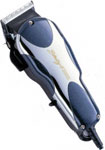
ClippersI don’t know why you’d want to just guess about the availability of your scalp donor hair. Have you been examined by a doctor? Body hair transplants (BHT) are technically possible, but they are not something I’d recommend for multiple reasons that I’ll try to explain simply. Body hair is not the same as scalp hair — it looks different, it feels different, it grows different. Even if the procedure is a technical success, it’s not going to give you natural looking results like you can achieve by using hair from the back of your head. Plus, I don’t know enough about your hair loss (donor, density, etc) to really be able to know if you’re even a candidate for any kind of hair transplant surgery.
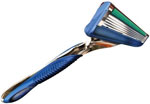

As you seem to be aware, body hair does not grow at the same rate as scalp hair and about half of transplanted body hair is in a dormant state (see more on that here). Scarring in the recipient area depends on the skills of the surgeon and staff… but if you’re going to shave your head in the future why would you even want a hair transplant? Wouldn’t that be like getting a nose job right before you decide to take up boxing as a sport?


Transplanting Hair from a Donor Using Stem Cells for Anti-Rejection?

Again in the news this week has been the transplantation of a windpipe to a young boy from a donor. The have taken stem cells from the bone marrow of the child and coated it onto the windpipe. It is hoped that this will prevent the need for anti rejection drugs. Do you think it could be possible to try someting like this with donor hair follicle if they were coated with the recipients stem cells?

Stem cells give new windpipe to boy

We all want the future technologies to happen right now. This type of procedure is experimental (possibly the first of its kind?), and if this technology can be applied to hair, it would still be years away. This is interesting stuff though, and I do appreciate you sending the link.

I’m guessing the bone marrow stem cells were used here because if there are problems with the recovery there is still the option of using anti-rejection medications. A lifesaving procedure (windpipe transplant) is worth trying experimental technologies on, as health risks from anti-rejection medication make them not worth using in a cosmetic procedure (hair transplant).


AutoloGel PRP Therapy

I just saw this press release and wanted to know your thoughts on AutoloGel. I know you’ve been critical of PRP recently, but I’m wondering if you’ve read the doctor’s article in the Forum magazine for doctors in the industry that you’ve mentioned.

Cytomedix’s AutoloGel(TM) System Highlighted in Hair Transplant Trade Journal

I did read the article about AutoloGel in the recent Hair Transplant Forum industry newsletter, but the science behind it didn’t impress me. The findings are worth discussing further, but it is just one doctor’s review. I am not a supporter of things like this that have not had proven peer-reviewed articles written about it. The use of PRP (platlet rich plasma) is all conjectural and adds to the complexity of the surgery, possibly increasing the risk of infections with its use.

You can read the article that the press release discusses here (PDF file).


Transplanting Hair Into a Cranial Morcellation Scar

I have a scar that is about the width of my pinky finger that goes from ear to ear on my head. This is a result of a surgery I had done when i was younger from cranial morcellation of my skull. I was wondering if there is anyway to get hair put into this scar.

There are ways to address such scars, including hair transplantation (in some people) or scalp surgery by those who are experts in the field. From what you described, I can not tell you which way to go, but scar repairs from brain surgery is one of the areas where what I do works very well. I need to see some good digital photos of the scarring and possibly would need to meet you to examine your head before giving any real options. Tentatively though, it does seem like you have some options.


Orchiectomy and Hair Loss

Hello Dr. Rassman,

First off, thank you for your excellent blog, extremely informative!

I am a 37 year old male who has had an orchiectomy (right testicle), which occurred about 1 month ago. So far everything is working out well (aside from fatigue) and I have not had any testosterone replacement therapy at this time. I also have some hair loss, I’d say I am about an early Norwood 3, with no loss at the crown (yet).

My question is this: What can I expect in the way of hair loss at this point? I realize my testosterone levels are lower (503ng/dl), and I’ve taken 1.25 mg of Proscar daily for about 6 months and it seems to have worked quite nicely, but I am still wondering what impact the orchiectomy might have for my hair loss. Will my hair loss advance as rapidly as it would have had the orchiectomy not occurred, or will it possibly stop?

Thanks Doc!

A loss of one testicle will be compensated by the other testicle as it may “rise” to meet the needs of your body. Usually, the remaining testicle will increase testosterone production and this is something you can follow with your doctor through appropriate blood tests. There should be no impact on your hair loss other than what you were destined to lose based upon your genetics.