Amazing result from these two drug. You should show your hairline pulled back to cement what we are now seeing.
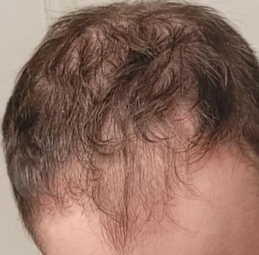
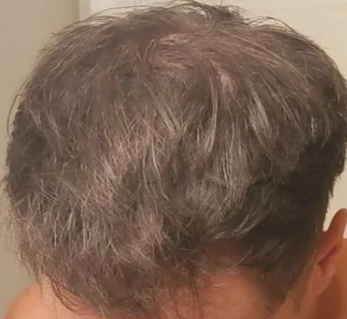

Amazing result from these two drug. You should show your hairline pulled back to cement what we are now seeing.
Ever since my hair started thinning it literally took over my life it’s all I think about I’m only 22 and I also overthink and worry about what people would say I’d they noticed it and I’m living in fear, I’m also scared how I’m gonna find a wife if I actually lose all my hair. I also can’t open up to my family about it cuz they’ll make fun of me or clown me it’s just the worse feeling in the world, I’m on oral min 2.5 for 4 months now I’m getting regrowth but I was little far back so it’s gonna take a while I also think that if might not regrow back. What’s crazy is I don’t even have mpb I have seb derm hair loss when I was 16 I never took care of my hair I wouldn’t wash it for weeks and it caused my hair to thin. If I do get my hair back one day I would not complain about anything and I’d be the happiest man alive
Not washing your hair when you were younger, did not cause hair loss. You are not equipped to manage this process, that is clear. You need to see a good doctor who can manage the process for you to make you “the happiest man alive.”
These results show that the apparent miniaturization that was there prior to starting these medications, have reversed.
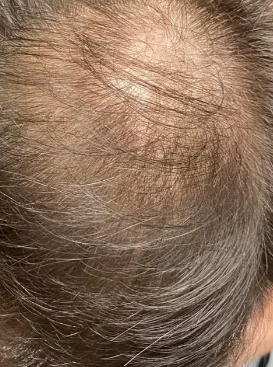
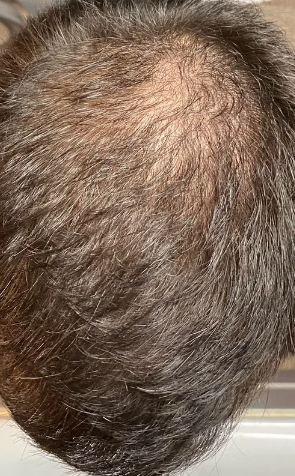
https://www.ncbi.nlm.nih.gov/pmc/articles/PMC9678755/
The pericardial effusion which has now been reported even on the low dose of 1.25 mgs which I prescribe often, creates warnings with swelling of the feet, legs, face and other body parts. When fluid builds up inside of the pericardial cavity (the sac around the heart), the heart has difficulty with blood return and thereby goes into heart failure over a period of time. Systemic swelling should be the warning everyone should recognize, and then stop the drug and contact their doctor.
This is what you can expect from minoxidil which seems to grow hair in your case, beyond just the scalp
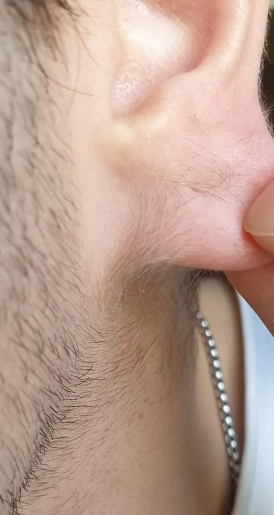
The new law in Turkay is that if you perform hair transplantation and are not a licensed doctor (plastic surgeon, dermatologist, or medical esthetic certified doctor (you will be sentenced to 1-3 years of imprisonment, and all health institutions that provide space to them or rent operating rooms to them will pay a penalty of $8000 US. Technicians will be restricted to only implanting grafts.
I received this information from a reputable blog site. There is so much money each year coming into Turkey, it is hard to imagine that such a law will be enforced. For those reading this blog, please let me know if your surgeries were cancelled in Turkey by emailing me to williamrassman33@gmail.com.
Significance as quoted by Ali Emre Ksaradeniz: “Turkey would lose 99% of its hair transplant market. 99% of the hair clinics would go bankrupt. The health Tourism wound collapse. Millions of people would lose their jobs. Some of them including techs, would lose jobs permanently. Thousand of licenses given would lose their relevance. At least $1 Billion come into Turkey would vanish into thin hair. The black market wound find a new location in the world.”
Do you think that this is the government’s plan?
I’m about to start taking 2.5mg of oral minoxidil to attempt to thicken my beard. I will be taking this 2.5mg daily for about 1 and half years until beard hairs become terminal. After , they become terminal I will stop the oral minoxidil. Is this a good plan? BTW, I noted shedding on my scalp when I started minoxidil so I added finasteride to address this problem.
Hair that is induced by minoxidil is minoxidil dependent, so getting the benefit from minoxidil for your beard and then stopping it is not in your best interests. Shedding associated with one of these drugs are an indication that they are working. Just wait out the shedding.
It’s now been 1 year since I started Fin only. I’m mid 40s and been thinning for 15+ years. Finally took the plunge to get on Finasteride 1 year ago.
Nice improvement, but still now where you need to be. You might add microneedling on the left side to induce more growth as finasteride doesn’t have a great track record on frontal hair loss reversal in men over 40.
I am getting a good response in my hairline with microneedling; however, I now want to take it to the areas I am thinning. Is it safe to do that?
Assuming that you have miniaturization that you want to try to reverse, yes you can microneedle in areas of miniaturization. If you should accidentally microneedle in normal hair, there will be no problems resulting from such an error.
I started to lose an unusual amount of hair about a year and a half ago. I realized that it was likely due to simultaneously hardcore intermittent fasting (Telogen Effluvium) and traction alopecia caused by a regretful man bun. Most of my hair is back now, and I’m not balding, but I lost density behind my hairline, and it shows sometimes, especially under overhead light. Does PRP save some follicles and regain some density?
By its nature, traction alopecia is usually an irreversible type of balding. I doubt that PRP will bring back those hairs. If it is extensive, then hair transplants work nicely. The telogen effluvium, on the other hand, is a temporary process and will reverse on its own. After re-reading your post a second time, I question if you ever had traction alopecia.
You are heading to a Full Norwood Class 7 pattern of balding and, therefore, must plan accordingly because you, I am sure, are expecting to live a long time and will always want to look normal and hairy. I have transplanted many men like you, but first, I want to determine your donor supply and your donor mass. These two critical measures will tell me if you have enough hair to cover the eventual pattern and, most importantly, what you can expect realistically.
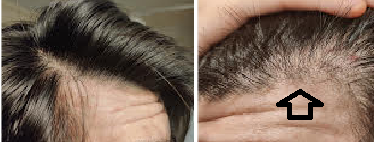
You can see in these two photos that this man’s right side has already undergone changes in maturation, while his left side (see arrow) shows the left side thinning, matching the other side once these miniaturized hairs have fallen out. These hairs may respond to finasteride in men under 25, less likely as the age increases in the frontal corners. The asymmetry is not unusual in my experience as sometimes one side recedes faster than the other side. Note that the hairs on his left side that are miniaturizing and falling out (arrow) hugging the highest crease of his furrowed brow. That is how I know this is a transition for a mature hairline; however, to be sure, I would want to look at the hairs 2-3 inches behind this leading edge to see if the hairs are miniaturizing. If they are not, then this could be a maturing hairline in a person with a strong, low central forelock. This is important to know because if this man assumes it is a balding process and starts on drugs like finasteride, he may be committing a lifetime of treatment unnecessarily. As a hair restoration specialist, my job is to make a proper diagnosis and help not only the balding men, but the men who think they are balding and are not. The value I bring is to differentiate between the two.
Dr. Rassman, is it possible for telogen effluvium shedding to stop, but to have hair not grow back? Or not as dense? Is it possible for the hairs to stay dormant? My shedding stopped a long time ago (years), but hair has yet to return. Do you have any suggestions? Thank you and sorry to bother you with this.
By definition, telogen effluvium is a temporary process. When it occurs in men, one must think of genetic hair loss as the cause of shedding. That means you must look into how you manage your hair loss from a therapeutic point of view. You can reach out to me at Williamrassman33@gmail.com, send photos, especially a frontal view with your eyebrows lifted high and your hair pulled back so I can see the frontal hairline. Give me your phone number, and I will call you.
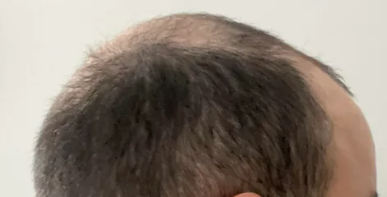
Good early response to this combination of finasteride and minoxidil. It would be best if he waited 6 months to show even more dramatic photos.The crown is usually more responsive than other parts of the scalp to such treatment.
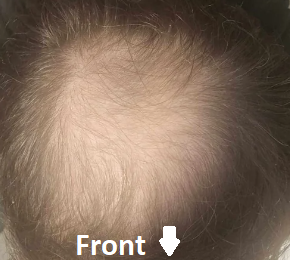
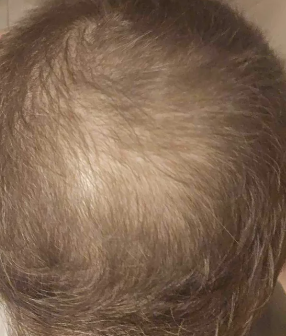
My granddad, with the cleanest bald head ever, was prescribed Dutasteride 2 years back for some prostate issues and has grown a full head of hair since then, with follicles never seen before sprouting up. I’d never seen him with a single strand of hair my entire life. He got more hair than his 21-year-old grandkid now lol (and pretty dense too)
I have seen the same results from finasteride (Proscar 5mg dose) in elderly men (not extreme reversal as you reported, but a respectable regrowth of hair in a 75 y/o male). It gives us hope that the stem cells for advanced balding are still alive and can be stimulated. We are now seeing men in their 40s and even their 50s using microneedling and getting growth from an area with no hair for more than two 2 decades. The problem with microneedling is that we don’t have experience on how long the new hair induced by this process will last. I tell those who try and get results to set up a maintenance schedule, possibly by reducing the microneedling from once a week to once a month.